Not putting 20% down can result in more than having to pay monthly PMI. It could impact the rates of interest on your mortgage, according to the CFPB. Some loan providers reward borrowers for higher down payments in the kind of a lower interest rate. Home loan lenders generally utilize risk-based prices when figuring out the interest rate on a loan.
Less threat, a lower rate. If you offer more than a 20% deposit it sends out a signal you can afford the home loan and therefore are less most likely to default, leaving the lender on the hook with the home. That can be a huge saving, offered you are likely to pay your home loan View website for three years.

25% in interest can have a meaningful impact throughout the years. When it concerns determining how much down payment you plan to provide, your cash circulation and cost savings are going to determine a great deal of the choice making. Twenty percent down is the way to prevent PMI. If you can't accumulate that much of a down payment, a smaller sized deposit can mean the difference between homeownership and renting.
Some novice buyers go through a bit of sticker shock when they become house owners, confronted with greater regular monthly expenses and the requirement to preserve or repair their brand-new house. To avoid that, some decide for a lower down payment. For home purchasers who are in the position to put the 20% down, it still may not make sense Find more info if they are utilizing cash that is making interest in an investment or savings account.
They won't lose the positive benefits of compounding either, which takes place when the revenues from an investment are reinvested. On the other hand, that 20% deposit may be essential if you are shopping in an extremely sought after area. With cost wars still breaking out in pockets of the U.S.
After all, no one wishes to agree to a sale price just to discover out the potential purchaser isn't eligible for the mortgage. A big deposit signifies strength and commitment to the sale procedure. A 20% down payment has actually long been the requirement when it concerns mortgages however many people are putting down a lot less.
A Biased View of Who Has The Best Interest Rates On Mortgages
Michelle Lerner House Buying As SmartAsset's home buying professional, acclaimed writer Michele Lerner brings more than twenty years of experience in property. Michele is the author of 2 books about house purchasing: "HOMEBUYING: Difficult Times, Very First Time, At Any Time," published by Capitol Books, and "New Home 101: Your Guide to Purchasing and Building a New House." Michele's work has actually appeared in The Washington Post, Real Estate Agent.
She is enthusiastic about helping purchasers through the process of ending up being property owners. The National Association of Real Estate Editors (NAREE) honored Michele in 2016 and 2017 with the award for Best Mortgage or Financial Genuine Estate Story in a Daily Newspaper.
Many homebuyers have a tough time juggling daily expenditures while conserving for a down payment or closing expenses. Rent, utilities, car payments, trainee loans, and charge card, not to discuss groceries, can often drain your checking account as quickly as cash is deposited. Thinking about all of that, it's not a surprise that saving for a house is one of the biggest difficulties to really purchasing a home.
Today's purchasers have mortgage options that need deposits well listed below 20% of the house's purchase price. In a lot of cases you can buy a house with just 3% down. There are also purchaser help programs that may help cover your deposit and possibly closing expenses. Funding from those programs frequently can be combined with financial presents from your friends and family to minimize your out-of-pocket expenses to buy a home.
If you're great at managing your credit and meet certain requirements, this might be the option for you. A mortgage loan provider can offer the specifics, assess your financial scenario, and determine eligibility. But prior to you call a lending institution, think about these preliminary requirements: A minimum of a single person on the loan need to be a newbie property buyer.
Or, if you're purchasing the home with another person, at least among you hasn't owned a home in the previous 3 years.) The home being funded should be a one-unit property (including townhouses, apartments, co-ops, and PUDs) and not a produced house (how many mortgages in the us). You plan to occupy the house as your primary residence; and The home mortgage needs to have a fixed rate (adjustable rate home loans [ARMs] are not eligible for the 3% down payment home loan).
An Unbiased View of What Do Underwriters Do For Mortgages
The minimum deposit essential might depend upon the type of home mortgage loan and the loan provider. You only need to down payment of 3. 5% for FHA loans, which are insured by the Federal Real Estate Administration. VA loans and USDA loans do not require any deposit at all. Lenders may accept as low as 3% for traditional loans, while jumbo loans loans higher than the adhering loan limitations set by Fannie and Freddie Mac may necessitate a bigger deposit, given the size of the loan.
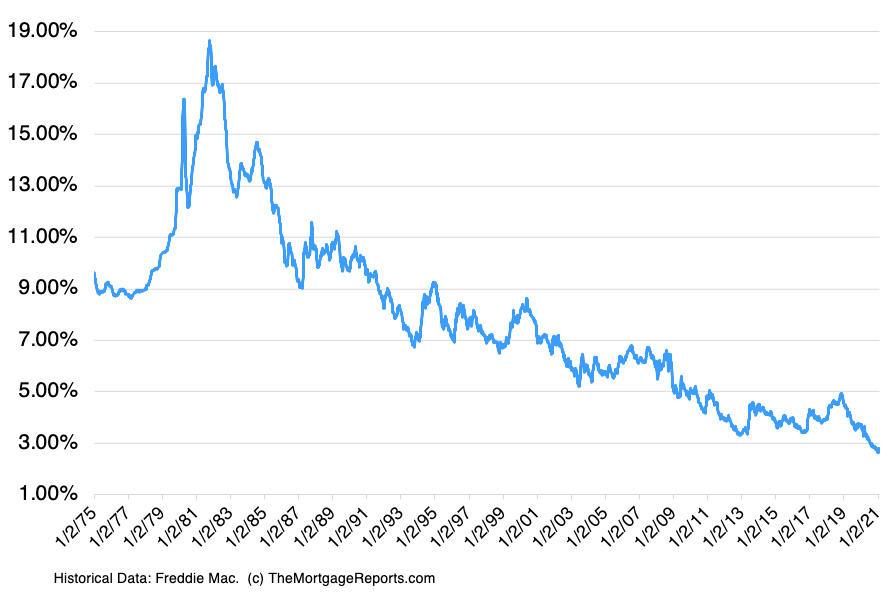
You can see today's mortgage rates here. Making a bigger deposit implies getting a smaller sized loan, which ultimately indicates you'll spend less in mortgage payments with time. Take a look at the chart listed below to see just how much you 'd pay monthly and in overall with 3 different down payment percentages.
65% APY. Down payment5% down10% down20% downMortgage quantity$ 380,000$ 360,000$ 320,000 Month-to-month home mortgage payment$ 1,740$ 1,647$ 1,464 Overall interest paid$ 245,800$ 233,860$ 206,990 Total home mortgage cost$ 624,066$ 591,221$ 525,539 We got these numbers with our home mortgage calculator, which you can use to see how much house you can pay for. The more money you've paid towards the house, the more equity you'll have in your home.
How much house equity you have is a mix of your loan-to-value ratio, or LTV, and the house's worth after appraisal. After paying your home loan for a while, if your home equity is 30%, then your loan-to-value ratio is 70%. Personal home mortgage insurance coverage (PMI) is insurance for the home loan loan provider.
Debtors of conventional loans who make a down payment of less than 20% are typically required to pay PMI. Home loan insurance coverage premiums are determined as percentage of your general loan quantity, and are frequently tacked on to your regular monthly payments. You can stop paying these insurance coverage premiums when you reach 20% equity or an LTV of less than 80%.
Home loan insurance isn't that expensive, especially if your credit score is high. For lots of people it http://messiahqbuh180.theglensecret.com/the-ultimate-guide-to-what-are-interest-rates-on-second-mortgages still makes sense to secure a home mortgage and pay home loan insurance instead of not get a house because they couldn't make a 20% down payment. Mortgage insurance coverage for FHA loans works differently. Find out more about it and personal mortgage insurance coverage here.
The Ultimate Guide To What Types Of Mortgages Are There
However, state and regional federal governments as well as non-profit companies provide loan support programs for very first time purchasers to help reduce these costs. All loan programs vary: some might offer down payment assistance in the form of a grant, while others may just provide a loan (albeit one with lax terms) that you 'd still have to pay back.
If you don't receive loan support, you can get monetary present from someone like a relative to assist you with the loan deposit.